Creative hackathons organized by Lemme investigate the use of generative AI in creative processes

13/07/2026 14:22
The experiments analyze how students in creative fields use generative artificial intelligence tools to develop solutions for practical challenges.
Original text: Gustavo Modena | Editing: Francieli Pagani Morais


Creative hackathons organized by Lemme

Between 2024 and 2025, Lemme developed a series of creative hackathons aimed at investigating the use of Generative Artificial Intelligence (GenAI) in creative processes. In total, five experiments are part of the master’s research by Gustavo Modena, conducted within the Graduate Program in Engineering and Knowledge Management at UFSC, under the guidance of Professor Júlio Monteiro Teixeira, leader of Lemme.

“At the beginning of my master’s journey, there was a quite intriguing restlessness: how to research Generative Artificial Intelligence without remaining only in the field of ideas? […] The central idea was this: to think more about the logic of production and not just about the final result.”

The proposal sought to observe, in practice, how students in creative fields appropriate GenAI tools during the development of solutions. In this experimental environment, it was possible to closely monitor fundamental stages, such as ideation, prompt engineering, testing, decision-making, and project presentation. In each activity, participants were organized into groups and challenged to create proposals in a short amount of time. Themes included issues such as the preservation of the Amazon Rainforest, health and well-being, urban mobility, ergonomics, sustainability, and the future of education.

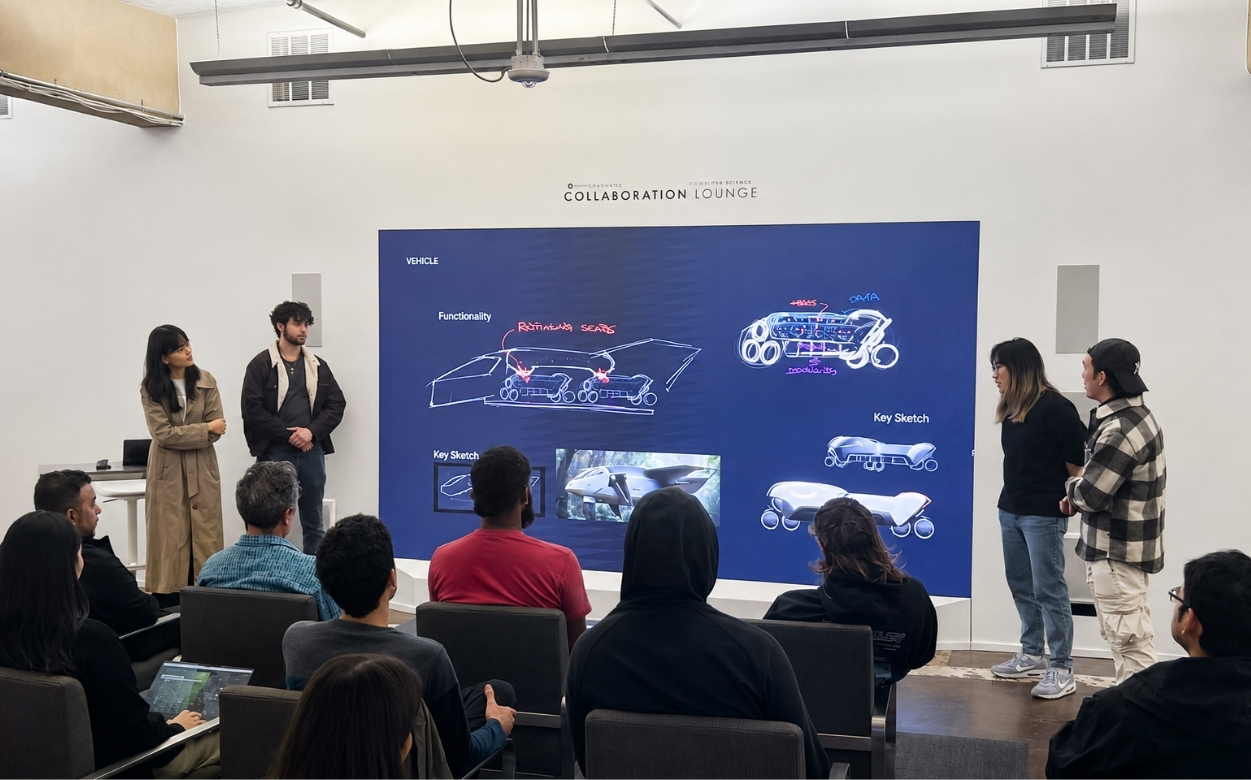
Part of the experiments also had an international dimension, connecting UFSC researchers to benchmark institutions such as the Academy of Art University in San Francisco. In this collaboration, students developed innovative solutions such as:

  • Transportable bicycle: focused on efficient urban mobility.
  • Wrist warmer: aimed at well-being and ergonomics.
  • “Lara” project: developed in California by approximately 20 students; the game converts the planting of trees in a virtual environment into real donations for the reforestation of the Amazon.
Creative hackathons developed by Lemme

The experiments involved researchers Melise Peruchini, Gustavo Modena, and Gabriel Albrecht, in addition to coordination by Professor Júlio Monteiro Teixeira. In different editions, the proposals were evaluated by jurors connected to the creative industry and national and international institutions.


Researchers involved in the hackathon experiments

Gustavo’s master’s dissertation details each of these experiments minutely, offering an in-depth analysis of the technical and creative appropriation of GenAI tools. In general, the research indicates that Generative AI acted primarily as a mediator of the creative process, contributing to expanding possibilities, accelerating tests, and supporting the visualization of ideas.


Timeline of the experiments conducted in the research

The central decisions, however, remained with the students, especially in defining the concepts, narratives, and paths of the solutions.

“And perhaps this was one of the most important lessons: generative artificial intelligence did not appear as a substitute for human creativity, but as a mediation. It helped to open paths, accelerate tests, and visualize possibilities, but the central decisions remained human.”

With the hackathons, Lemme consolidates an investigative front aimed at understanding how emerging technologies permeate education and practice in the creative industry. The initiative is continuously expanding: in addition to the five experiments analyzed in the dissertation, two new hackathons have already been held, and other editions are planned to expand the research on GenAI in concrete creative contexts.

“It is from this path that the dissertation is born: from the attempt to observe creation happening in real time. Among these ideas, tools, choices, and revisions, the hackathons showed us, curious researchers, that researching GenAI in practice is recognizing that technology only gains meaning when it meets people, contexts, and real problems.”

Details on the methodology, the results of each experiment, and in-depth reflections on the use of AI in design are available in Gustavo Modena’s master’s dissertation, titled The use of Generative Artificial Intelligence in creative hackathons: experimentation and mediation. The work has already been defended and can be accessed in full in the UFSC Institutional Repository at the link: https://repositorio.ufsc.br/.

Paths of innovation: visits with business leaders from Espírito Santo in Silicon Valley, California

25/10/2023 20:28
The mission included visits to several leading organizations in the fields of innovation and education. It provided valuable insights into innovation practices and initiatives developed in collaboration with renowned organizations such as Adobe, Stellantis, Stanford, Apple, and Google.
By Renan L. Fonseca, Júlio Monteiro Teixeira and ChatGPT-3


Adobe — California, United States

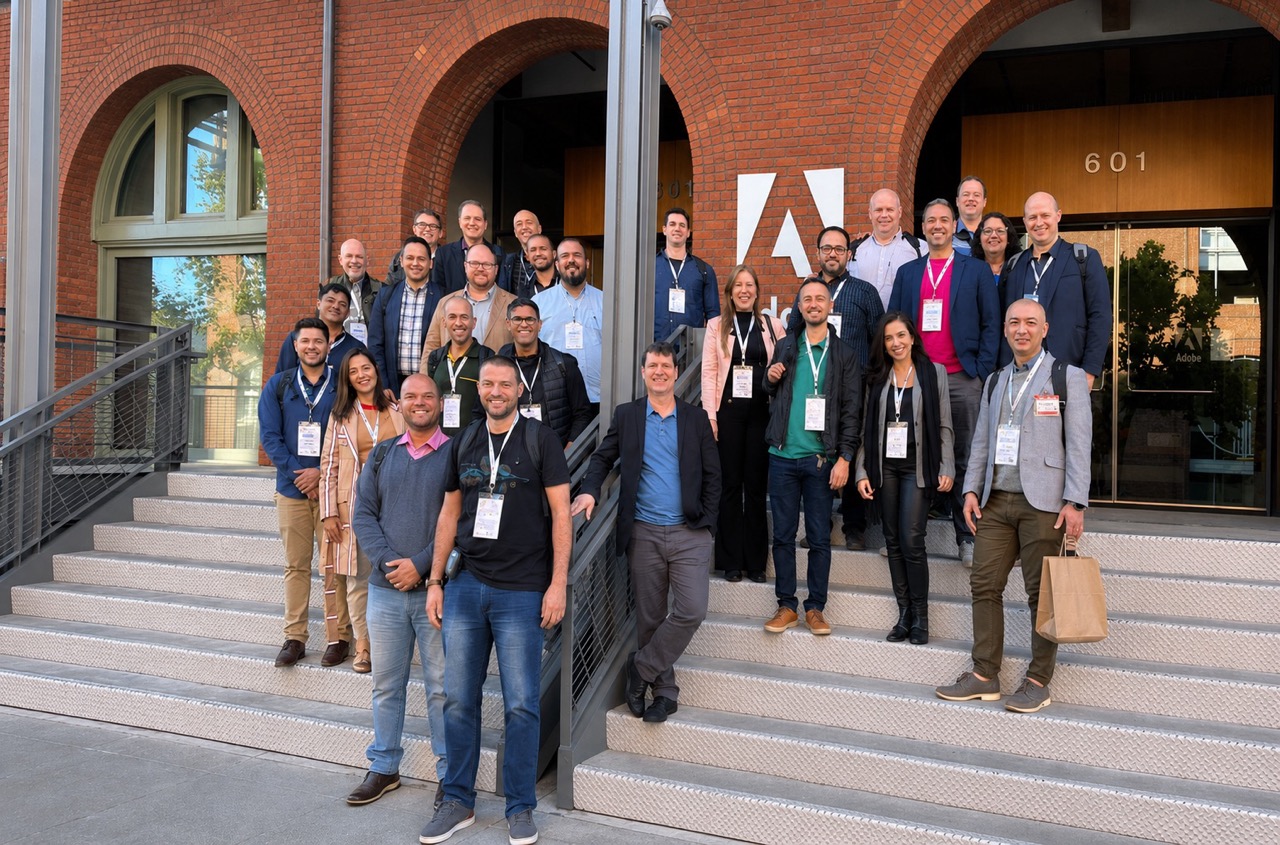
From September 8 to 11, 2023, the researcher had the opportunity to accompany a group of business leaders participating in an international mission organized by the Espírito Santo Cooperative Innovation Program. The mission was carried out in partnership with IXL Center, a Boston-based company. The itinerary included visits to leading organizations on both the East and West Coasts, including New York and Boston, as well as the Bay Area in Northern California. The researcher was responsible for leading the activities with the 28 business leaders during the visits that took place in the Bay Area.


Hult — California, United States

On September 8, the visiting group took part in a series of technical visits to institutions in San Francisco. The first visit was to Adobe Inc., where, in addition to touring the facilities, participants attended a lecture by Brooke Hopper. The presentation focused on the company’s latest software features, particularly those related to artificial intelligence.

Technical visits to innovation institutions — California, United States

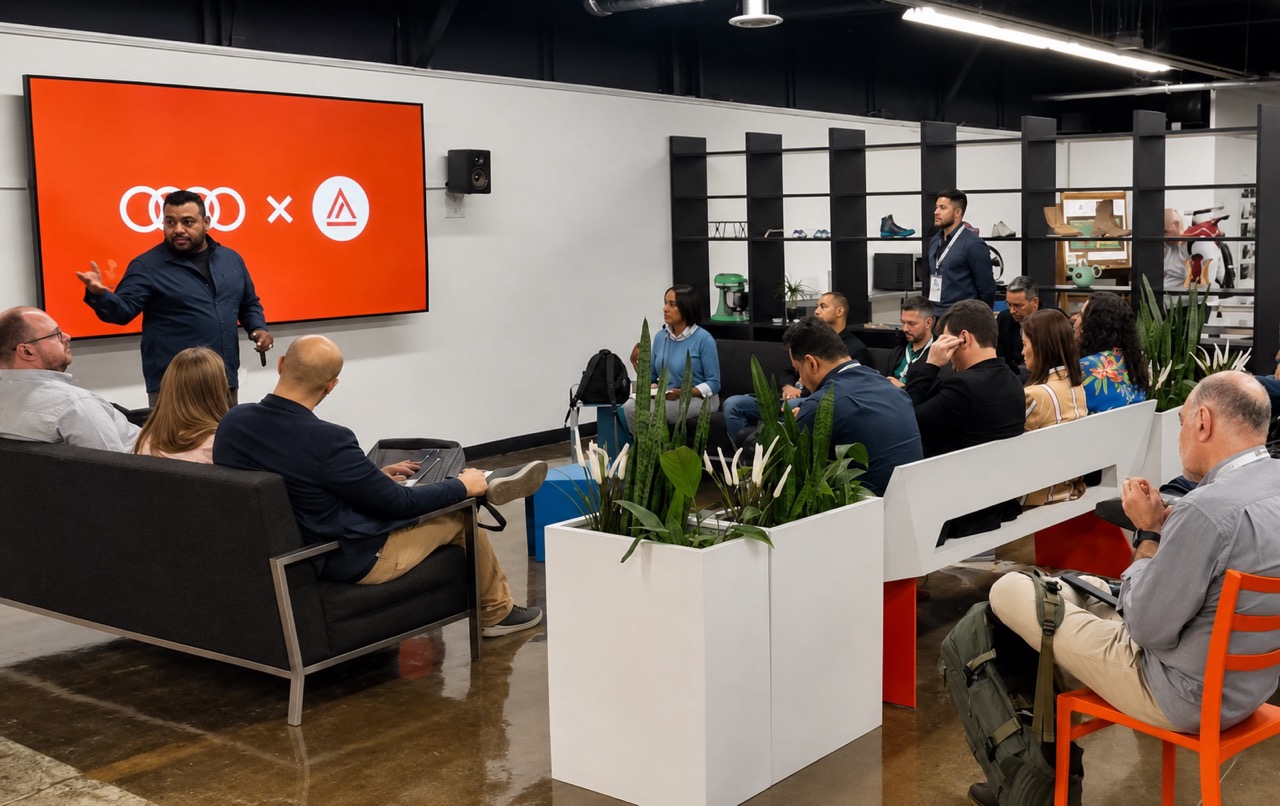
As the program continued, the group visited the design office of Stellantis, a multinational Franco-Italian-American automotive group formed through the merger of the Italian-American automaker Fiat Chrysler Automobiles and the French automaker PSA Group. During the visit, topics related to innovation were discussed, with particular emphasis on open innovation initiatives developed in partnership with the Academy of Art University, especially the School of Industrial Design, whose campus shares the same building. At the School of Industrial Design, Director Antonio Borja guided the visitors through the facilities, which include classrooms and rapid modeling and prototyping laboratories. He also provided detailed explanations about the dynamics of open innovation projects carried out in collaboration with companies such as Stellantis, as well as other partner organizations.

In the afternoon, the business leaders participating in the mission visited the Apex-Brasil North America Office, where they had the opportunity to deepen their understanding of the institution’s role in supporting Brazilian companies in activities related to export promotion, foreign investment attraction, and internationalization processes. It is worth noting that the San Francisco office is primarily dedicated to promoting products and services aimed at startups. In this context, the main resources and case studies were presented, focusing predominantly on Brazilian companies with a presence in the Valley.

Stanford University — Stanford, California, United States

In the afternoon, the business leaders participating in the mission visited the Apex-Brasil North America Office, where they had the opportunity to deepen their understanding of the institution’s role in supporting Brazilian companies in activities related to export promotion, foreign investment attraction, and internationalization processes. It is worth noting that the San Francisco office is primarily dedicated to promoting products and services aimed at startups. In this context, the main resources and case studies were presented, focusing predominantly on Brazilian companies with a presence in the Valley.

On September 11, 2023, the activities took place in Palo Alto, California. In the morning, the group had the opportunity to attend a lecture by Brazilian entrepreneur Alexandre Abdo Hadade. During his presentation, Hadade shared his entrepreneurial journey, highlighting his experience leading Birdie in Silicon Valley. Participants then proceeded to Apple’s headquarters, where they were welcomed by Nelson Lee. During the visit, the group members explored the company’s Visitor Center and received a presentation on Apple’s innovative products.

In the afternoon, the group was taken to the Stanford University campus, where participants joined a tour called “Innovation Path,” guided by Brazilian guide Mariangela.

This experience allowed participants to immerse themselves in the academic environment that has long served as fertile ground for research development and innovation at Stanford.

Later, the group was welcomed at Google, where they were received by Brazilian professional Pedro Cintra. This visit offered a unique opportunity to explore the company’s operations and gain a better understanding of its role in the global technology landscape. The final stop on the planned itinerary took the business leaders to WeWork Coworking, where they attended another lecture. This time, the presentation was led by David Vinicius, who shared valuable insights into his startup journey in Silicon Valley, offering participants a broader view of the region’s entrepreneurial environment.

Lemme researchers deliver lectures to students at the Academy of Art University

22/04/2023 20:12
Researchers from Lemme – Visual Management and Digital Innovation delivered two lectures on personas and prototyping techniques for innovation projects on April 12 and 17, 2023. The sessions were held in a hybrid format for students from the Graphic Design, Industrial Design, and Architecture programs at the Academy of Art University in San Francisco, California.
Original publication: UFSC News


Professor Júlio presents LEMME Lab research at the Academy of Art University in San Francisco, California.

One of Lemme’s coordinators, Professor Júlio Monteiro Teixeira, attended the sessions in person while conducting postdoctoral research at the university.

Master’s researcher Jefferson Velasco and Juliana Krupahtz, who holds a master’s degree, also participated remotely. Their presentations explored different approaches and techniques related to personas and prototyping. They discussed the advantages and limitations of Proto Personas and Data Personas as methods for representing target audiences, as well as the types of feedback that can be expected at different levels of prototype fidelity.

Students from the Academy of Art University also participated in a hybrid format, with attendees joining both in person from San Francisco and remotely from Asia, Europe, North America, Central America, and South America.

“These presentations mark the beginning of a long-awaited exchange of knowledge between the institutions. I have been in California for only two months and, in addition to the university where these lectures were delivered, I am already strengthening connections with researchers from other research centers at Berkeley and Stanford,” said Professor Júlio.


Researchers deliver a remote lecture to students at the U.S. university. Photo: Personal archive.

About LemmeLab

Lemme is a research group registered in the directory of Brazil’s National Council for Scientific and Technological Development (CNPq). The group is led by Professors Júlio Monteiro Teixeira and Israel de Alcântara Braglia.

It brings together more than twenty researchers, including students and alumni primarily affiliated with two graduate programs at the Federal University of Santa Catarina: the Graduate Program in Design and the Graduate Program in Engineering and Knowledge Management.

More information:
julio.teixeira@ufsc.br
https://lemme.ufsc.br

Conheça o Lemme

24/01/2023 15:09

Inovação Digital e Gestão Visual. Acreditamos na pesquisa científica interdisciplinar aplicada à inovação, à gestão e às mídias por meio do design.Quem somos? Somos um grupo de pesquisa vinculado ao curso de Design e ao Programa de pós-graduação em design da UFSC.Who we are?Presentation made in 2020 about our research and our team.

Apresentação feita em 2020 sobre nossa pesquisa e nossa equipe.

https://www.youtube.com/embed/a66HfdIj2s0
Mais de 45 empresas atendidas Brinhosa, Patrícia Goedert e BrasilRad Photonita, Wier e Making Way2, Geekhunter e krugans

Acesse nossas redes sociais: